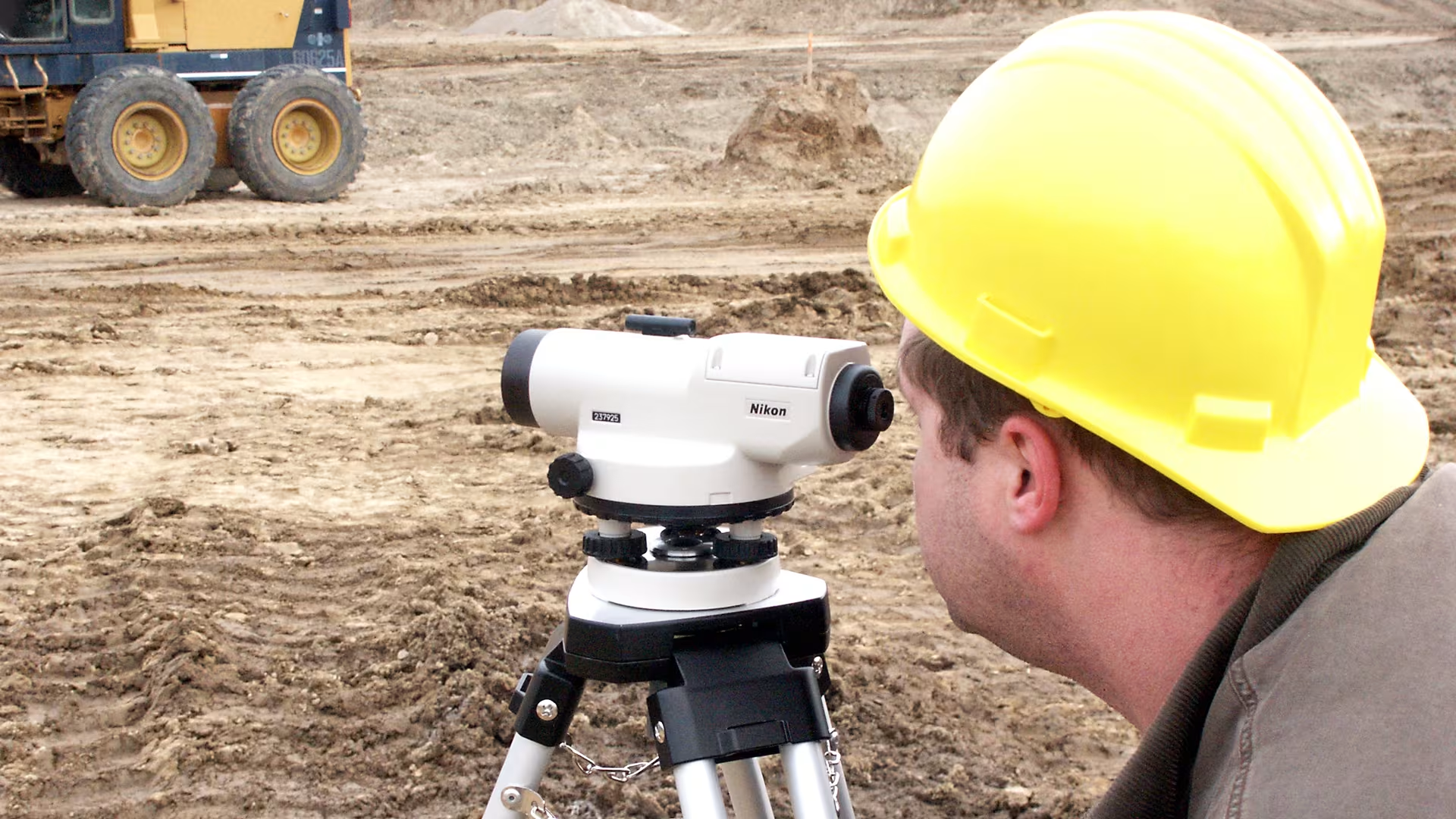
Contact OPTRON to find out more about our complete range of Survey Solutions!
A dumpy (automatic) level is one of the most recognisable tools in surveying and construction. Despite the rise of digital and laser technologies, it remains widely used on sites where reliability and simplicity matter most.
At its core, this level is a fixed optical instrument designed to measure vertical levels with accuracy. It helps ensure that levels are set correctly before work begins.
What is a Dumpy Level?
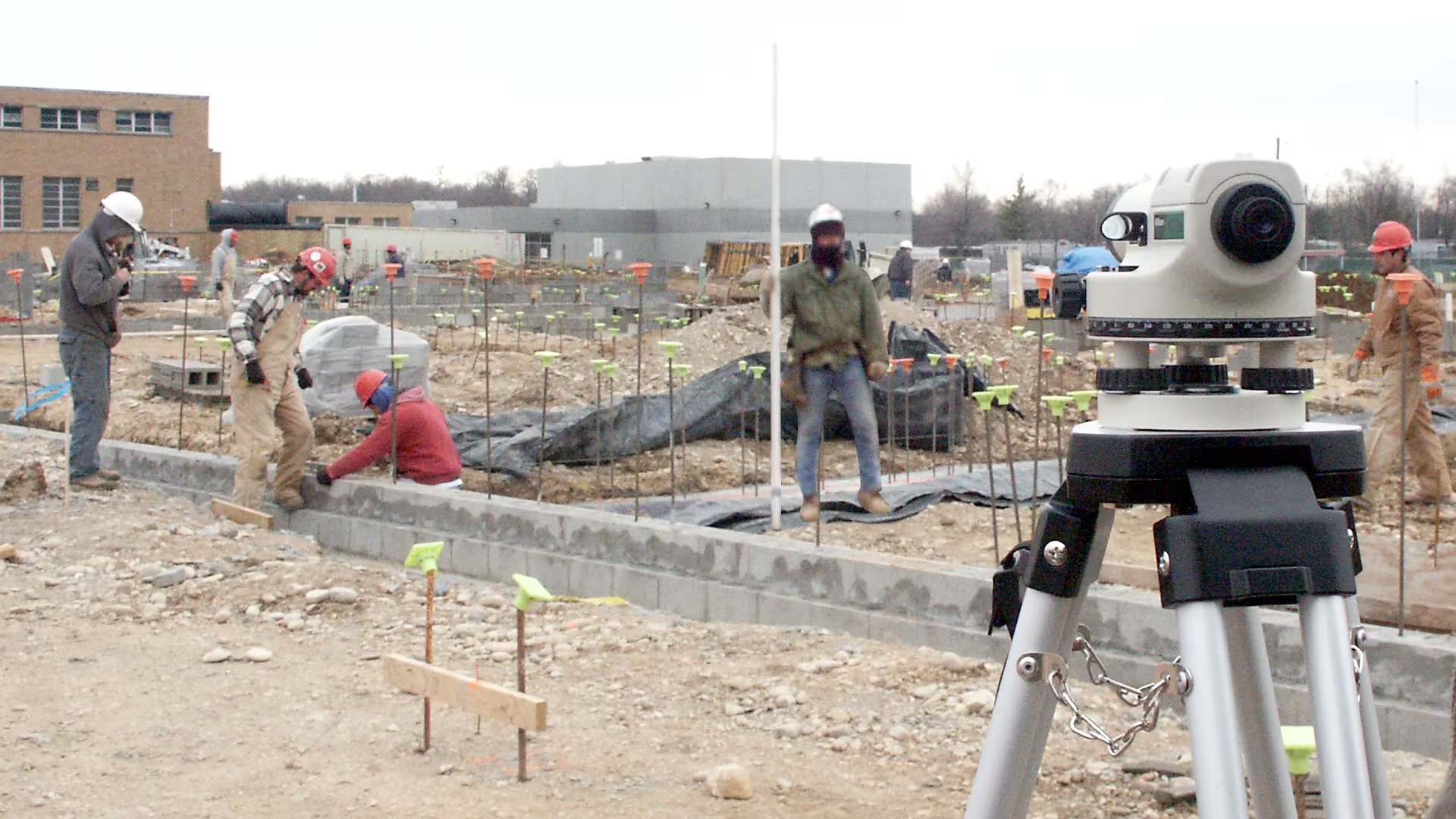
This tool is an optical level used to establish and measure height differences between points. It consists of a telescope, mounted on a stable base (tribrach) which is fixed in position and adjusted using levelling screws.
Unlike theodolites, the telescope does not rotate vertically. This fixed design is what gives this instrument its strength and consistent performance in the field.
It is commonly used with a levelling staff, with the operator reading measurements through the telescope to determine height differences across a site. This makes it a dependable levelling instrument for setting out and basic surveying tasks.
Modern digital levels provide a useful comparison to traditional tools, particularly in terms of accuracy and efficiency, as reflected in OPTRON’s range of digital levels.
How a Dumpy Level Works
Using this level is straightforward, which is part of its appeal. The instrument is mounted on a tripod and levelled using foot screws before the operator looks through the telescope to align the crosshairs with a staff, held at a specific point on site. The telescope rotates 360° horizontally, allowing readings to be taken across multiple points on the same plane.
These readings are then compared to calculate height differences, supporting accurate site levelling before construction begins.
Because the system is optical, it does not rely on batteries or complex software. This makes it particularly useful in environments where conditions are unpredictable or resources are limited.
Dumpy Level vs Automatic and Digital Levels
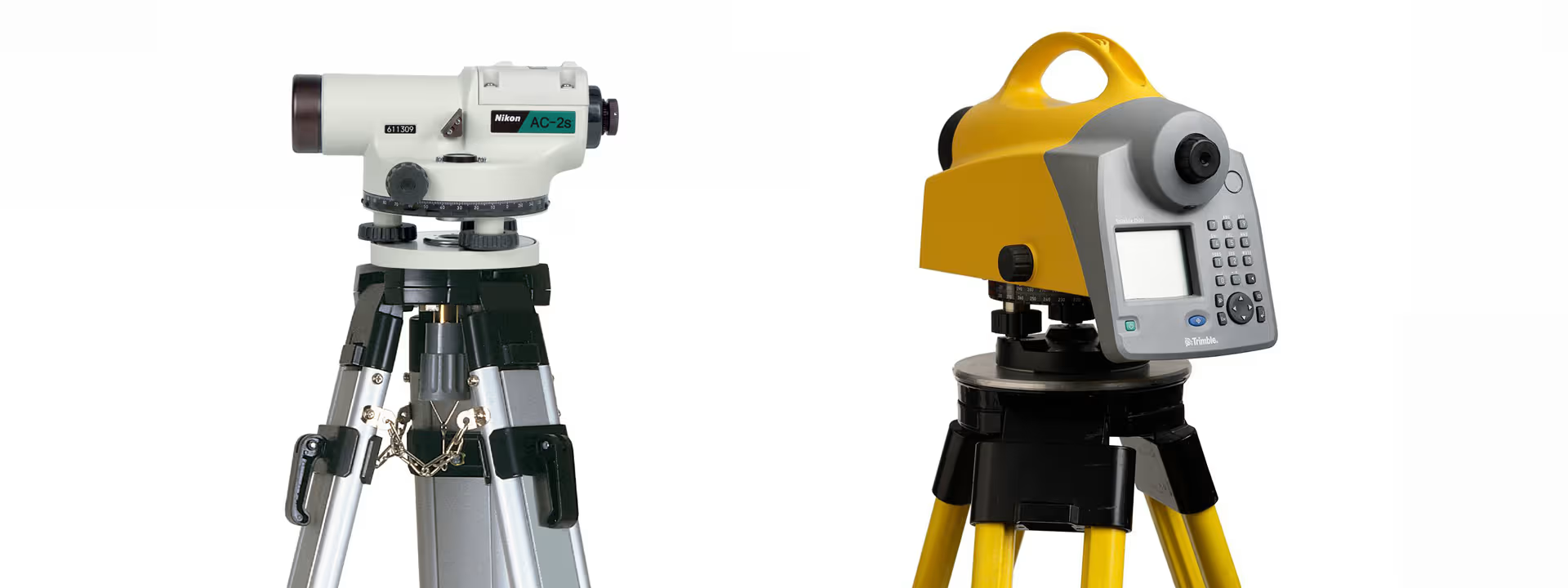
While this traditional dumpy level reliable, it sits alongside more modern tools such as automatic, digital and laser levels – each serving a different purpose depending on the level of precision, speed and site requirements.
For projects that require faster setup and reduced manual adjustment, these instruments offer a practical step forward in levelling technology.
| Feature | Dumpy Level | Automatic Level | Digital Level |
|---|---|---|---|
| Setup | Manual levelling with bubble adjustment | Self-levelling via internal compensator | Self-levelling with digital calibration |
| Ease of Use | Manual setup, skill-dependent | Easier setup with internal stabilisation | Clear readings with digital display |
| Accuracy | High (operator-dependent) | High with reduced user error | Very high (digital precision) |
| Speed | Slower, manual readings | Faster than the dumpy level | Fastest with automated measurements |
| Durability | Very robust, no electronics | Durable with internal components | More sensitive due to electronics |
| Best Use | Basic levelling, smaller or rugged sites | General construction and surveying | High-precision or large-scale projects |
| Data Handling | Manual recording | Manual recording | Digital storage and logging |
The level’s fixed design makes it highly durable and allows for consistent performance in demanding environments where electronic instruments may be more vulnerable.
When Should You Use a Dumpy Level?
Many situations still call for this tool, especially when straightforward levelling is needed without advanced digital features.
1. Site Setup and Basic Levelling
At the start of a project, getting levels right sets the foundation for everything that follows. It is well-suited to establishing reference points and checking ground levels before construction begins.
2. Smaller Construction Projects
For smaller builds, the focus is often on efficiency rather than complex data capture. It supports steady, repeatable measurements without adding unnecessary complexity to the workflow.
3. Challenging Site Conditions
On sites with harsh or unpredictable environments, equipment needs to hold up. This tool performs consistently in conditions where dust, heat or rough handling could impact more sensitive instruments.
It is also a practical option in remote locations where access to power or technical support is limited.
Accuracy, Simplicity and Durability
The value of a dumpy (automatic) level lies in a few core strengths that support consistent performance on site.
Its stable, fixed design allows for reliable readings and once levelled correctly, delivers accuracy that holds throughout the project. With fewer moving parts and no electronics, it is well-suited to demanding site conditions.
These qualities are why it continues to be used alongside more advanced surveying technologies.
While these optical instruments remain relevant, many projects benefit from newer tools.
Digital and laser levels improve both speed and workflow efficiency, particularly on large-scale developments or where high precision is required. They reduce manual input and help simplify workflows.
Solutions such as those in OPTRON’s levelling instrument and digital level range enhance accuracy and productivity in modern surveying environments.
Choosing the right tool depends on the project: a dumpy level is more than sufficient in some cases, while in others upgrading to a digital or laser solution can save time and improve outcomes.
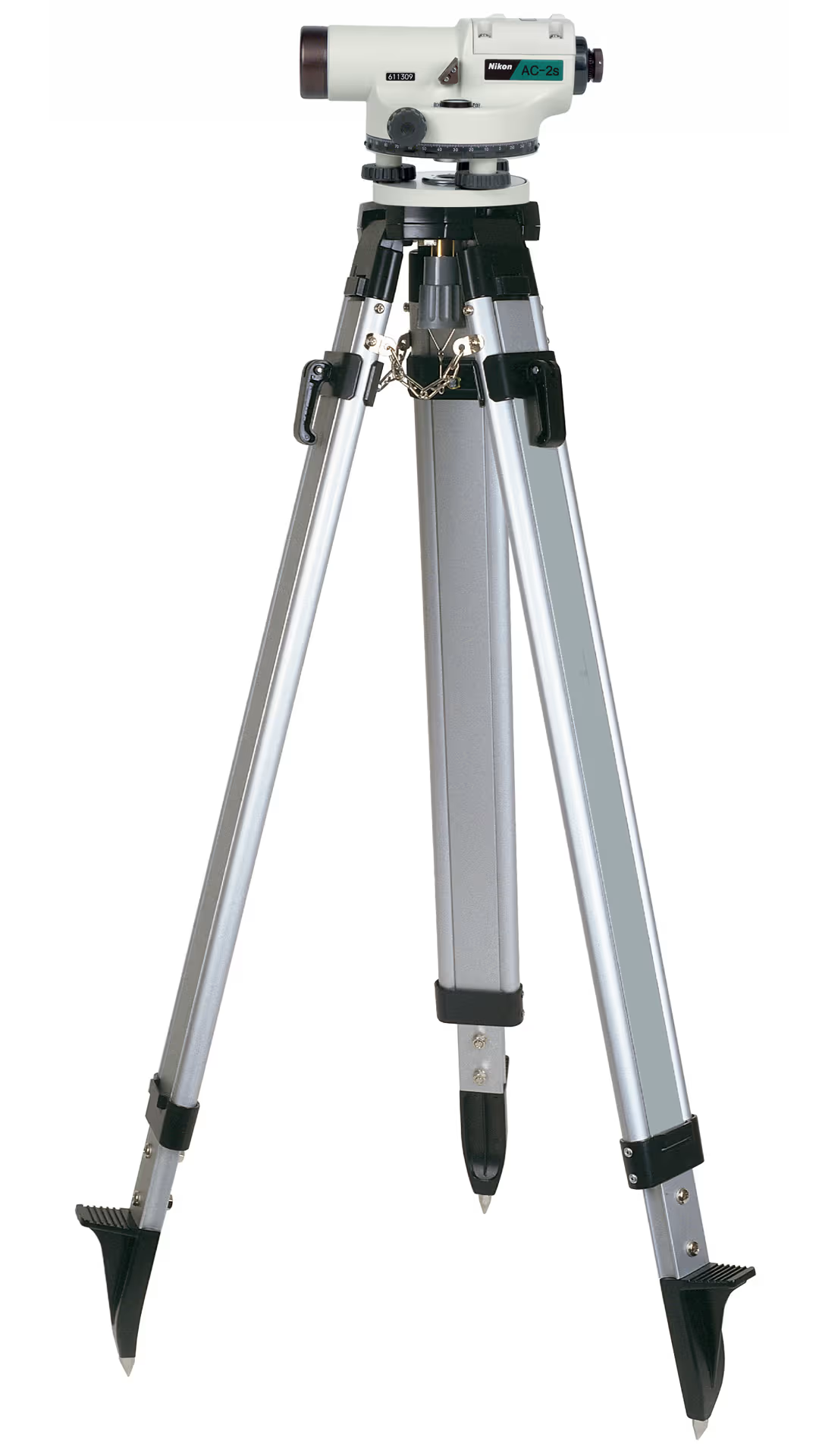
OPTRON Levelling Solutions for Every Site
Whether you prefer traditional optical tools or advanced digital systems, OPTRON offers levelling solutions designed to help you work with greater accuracy, efficiency and confidence on site.
From daily setup tasks to complex project requirements, the right levelling technology can help streamline workflows and improve overall project performance.
Explore OPTRON’s levelling solutions and speak to our team to find the best fit for your site and workflow needs.